Child Abuse Prevention

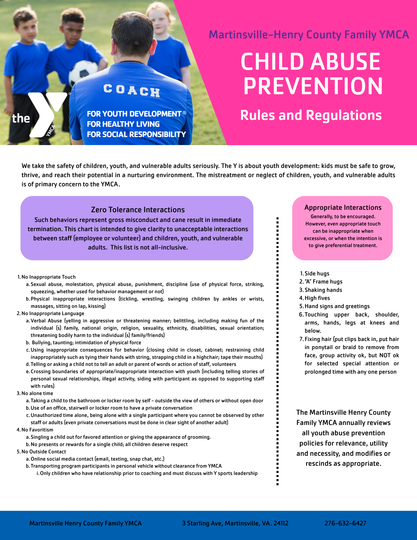
We take the safety of children, youth, and vulnerable adults seriously. The Y is about youth development: kids must be safe to grow, thrive, and reach their potential in a nurturing environment. The mistreatment or neglect of children, youth, and vulnerable adults is of primary concern to the YMCA.

Zero Tolerance Interactions

Such behaviors represent gross misconduct and cane result in immediate termination. This chart is intended to give clarity to unacceptable interactions between staff (employee or volunteer) and children, youth, and vulnerable adults. This list is not all-inclusive.

  1. No Inappropriate Touch
    1. Sexual abuse, molestation, physical abuse, punishment, discipline (use of physical force, striking, squeezing, whether used for behavior management or not)
    2. Physical inappropriate interactions (tickling, wrestling, swinging children by ankles or wrists, massages, sitting on lap, kissing)
  2. No Inappropriate Language
    1. Verbal Abuse (yelling in aggressive or threatening manner; belittling, including making fun of the individual (s) family, national origin, religion, sexuality, ethnicity, disabilities, sexual orientation; threatening bodily harm to the individual (s) family/friends)
    2. Bullying, taunting; intimidation of physical force
    3. Using inappropriate consequences for behavior (closing child in closet, cabinet; restraining child inappropriately such as tying their hands with string, strapping child in a highchair; tape their mouths)
    4. Telling or asking a child not to tell an adult or parent of words or action of staff, volunteers
    5. Crossing boundaries of appropriate/inappropriate interaction with youth (including telling stories of personal sexual relationships, illegal activity, siding with participant as opposed to supporting staff with rules)
  3. No alone time
    1. Taking a child to the bathroom or locker room by self - outside the view of others or without open door
    2. Use of an office, stairwell or locker room to have a private conversation
    3. Unauthorized time alone, being alone with a single participant where you cannot be observed by other staff or adults (even private conversations must be done in clear sight of another adult)
  4. No Favoritism
    1. Singling a child out for favored attention or giving the appearance of grooming.
    2. No presents or rewards for a single child; all children deserve respect
  5. No Outside Contact
    1. Online social media contact (email, texting, snap chat, etc.)
    2. Transporting program participants in personal vehicle without clearance from YMCA
      1. Only children who have relationship prior to coaching and must discuss with Y sports leadership


Appropriate Interactions

Generally, to be encouraged. However, even appropriate touch can be inappropriate when excessive, or when the intention is to give preferential treatment.

  1. Side hugs
  2. “A” Frame hugs
  3. Shaking hands
  4. High fives
  5. Hand signs and greetings
  6. Touching upper back, shoulder, arms, hands, legs at knees and below.
  7. Fixing hair (put clips back in, put hair in ponytail or braid to remove from face, group activity ok, but NOT ok for selected special attention or prolonged time with any one person

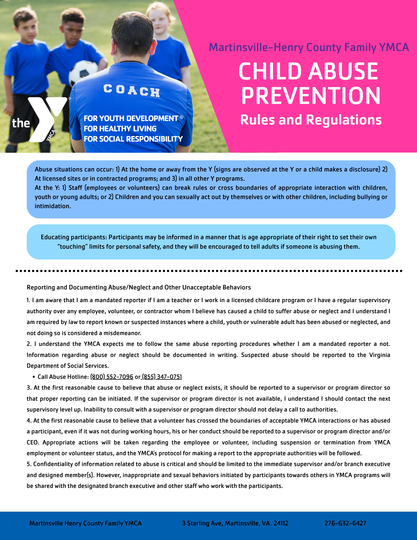
Abuse situations can occur: 1) At the home or away from the Y (signs are observed at the Y or a child makes a disclosure) 2) At licensed sites or in contracted programs; and 3) in all other Y programs.

At the Y: 1) Staff (employees or volunteers) can break rules or cross boundaries of appropriate interaction with children, youth or young adults; or 2) Children and you can sexually act out by themselves or with other children, including bullying or intimidation.

Educating participants: Participants may be informed in a manner that is age appropriate of their right to set their own “touching” limits for personal safety, and they will be encouraged to tell adults if someone is abusing them.

Reporting and Documenting Abuse/Neglect and Other Unacceptable Behaviors

1. I am aware that I am a mandated reporter if I am a teacher or I work in a licensed childcare program or I have a regular supervisory authority over any employee, volunteer, or contractor whom I believe has caused a child to suffer abuse or neglect and I understand I am required by law to report known or suspected instances where a child, youth or vulnerable adult has been abused or neglected, and not doing so is considered a misdemeanor.

2. I understand the YMCA expects me to follow the same abuse reporting procedures whether I am a mandated reporter a not. Information regarding abuse or neglect should be documented in writing. Suspected abuse should be reported to the Virginia Department of Social Services.

3. At the first reasonable cause to believe that abuse or neglect exists, it should be reported to a supervisor or program director so that proper reporting can be initiated. If the supervisor or program director is not available, I understand I should contact the next supervisory level up. Inability to consult with a supervisor or program director should not delay a call to authorities.

4. At the first reasonable cause to believe that a volunteer has crossed the boundaries of acceptable YMCA interactions or has abused a participant, even if it was not during working hours, his or her conduct should be reported to a supervisor or program director and/or CEO. Appropriate actions will be taken regarding the employee or volunteer, including suspension or termination from YMCA employment or volunteer status, and the YMCA’s protocol for making a report to the appropriate authorities will be followed.

5. Confidentiality of information related to abuse is critical and should be limited to the immediate supervisor and/or branch executive and designed member(s). However, inappropriate and sexual behaviors initiated by participants towards others in YMCA programs will be shared with the designated branch executive and other staff who work with the participants.